In the field of underground engineering, tunnel drilling rigs are indispensable key equipment. Designed specifically for underground environments such as tunnels and mines, they provide core support for geological exploration, resource extraction, safety protection, and other work through precise drilling operations. Whether it is gas control in coal mines or stratum analysis in geological surveys, tunnel drilling rigs play an irreplaceable role. This article will detail the functions, application fields, and key selection points of tunnel drilling rigs to help you fully understand this “”sharp tool”” for underground engineering.
I. Core Functions of Tunnel Drilling Rigs: Adapting to Multiple Scenarios from Safety to Exploration
The functional design of tunnel drilling rigs closely revolves around the actual needs of underground engineering, covering multiple dimensions such as safety protection, resource development, and geological exploration, which can be specifically divided into the following categories:
1. Safety Protection: Building a “”Safety Net”” for Underground Operations
The underground environment is complex, with hidden dangers such as gas, water hazards, and rock bursts constantly threatening operational safety. Tunnel drilling rigs provide key support for safety protection through targeted drilling operations. For example, **drilling gas drainage holes** can effectively reduce gas concentration in mines and prevent gas explosions; **water hazard prevention holes** can explore the distribution of underground water sources and avoid water inrush risks in advance; **rock burst prevention holes** provide data support for preventing rock bursts by monitoring changes in formation stress. In addition, in response to mine fire hazards, the rig can also be used for **fire prevention and extinguishing drilling**, controlling the spread of fire by injecting fire-extinguishing materials or cooling media.
2. Resource Development: A “”Booster”” for Improving Mining Efficiency
In resource mining scenarios such as coal mines, tunnel drilling rigs perform **coal seam water injection hole** operations, injecting high-pressure water into coal seams to soften the coal seam structure, reduce mining difficulty, and reduce dust generation. This function not only improves mining efficiency but also optimizes the working environment and reduces health risks for workers.
3. Geological Exploration: A “”Perspective Lens”” for Unlocking Underground Information
Geological exploration is the foundation of underground engineering. Tunnel drilling rigs obtain underground rock core samples through **geological exploration holes**, helping engineers analyze key information such as rock types and geological structures; **geological anomaly exploration holes** can accurately locate underground abnormal structures such as faults and subsidence columns, providing data basis for engineering design and safe construction.
II. Application Fields of Tunnel Drilling Rigs: Covering Underground Engineering Needs in Multiple Industries
With diverse functions, tunnel drilling rigs play a core role in multiple fields. The following are their main application scenarios:
1. Underground Coal Mines: “”Necessary Equipment”” for Ensuring Safe Production
In coal mining, tunnel drilling rigs are a dual guarantee of safety and efficiency. Whether it is gas extraction, water hazard prevention, rock burst monitoring, or fire prevention and extinguishing operations, the rigs undertake key tasks. For example, through directional drilling technology, the rig can achieve long-distance gas drainage to reduce gas concentration from the source; in water hazard prevention, after exploring the water source, the rig can cooperate with grouting technology to block water-conducting channels and avoid mine water inrush accidents.
2. Geological Exploration: “”Core Tool”” for Resource Investigation
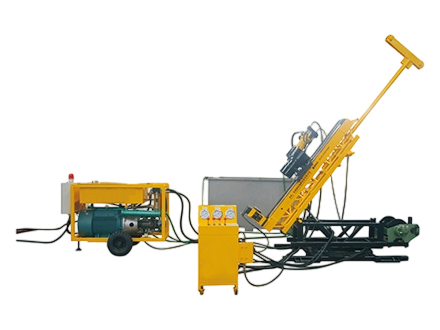
Geological exploration is the prerequisite for mineral resource development and engineering construction. Tunnel drilling rigs obtain underground stratum information by drilling exploration holes of different depths. Whether it is resource exploration of metal ores and non-metal ores or engineering geological surveys, the rigs can provide high-quality rock core samples and stratum data, laying the foundation for resource evaluation and engineering planning.
3. Hydrogeology: “”Key Assistant”” for Underground Water Resource Development
In hydrogeological surveys, tunnel drilling rigs are used for **underground water resource exploration hole** operations to explore hydrogeological characteristics such as water level, water quality, and aquifer distribution. This function not only supports the rational development of underground water resources but also provides data support for water conservancy projects, urban water supply, and other projects.
III. How to Choose the Right Tunnel Drilling Rig? Key Selection Points
Choosing a suitable tunnel drilling rig requires considering specific application scenarios, operation requirements, and environmental conditions. The following are the core selection points:
1. Clarify the Application Scenario: Underground or Ground?
Tunnel drilling rigs need to be designed to adapt to different operating environments. For example, underground coal mines have narrow spaces and limited ventilation conditions, so models with compact structure and strong explosion-proof performance should be selected; while ground geological exploration can consider equipment with a wider operating range and greater drilling depth. In addition, if operation in complex terrain is required, crawler-type tunnel drilling rigs will be a better choice with good mobility and stability.
2. Match Drilling Requirements: Balance of Depth and Diameter
Different operations have different requirements for drilling depth and diameter. For example, gas drainage holes usually require a larger diameter and medium depth, while geological exploration holes may require a smaller diameter but greater depth. When selecting, it is necessary to choose a model with suitable drilling depth and diameter according to actual needs to avoid “”overkill”” or “”insufficient capacity””.
3. Pay Attention to Equipment Characteristics: Hydraulic System and Operational Convenience
Fully hydraulic tunnel drilling rigs are widely used in modern underground engineering due to their strong power and flexible operation. Their hydraulic systems can achieve precise speed regulation and pressure control, adapting to complex formation drilling; at the same time, automated operation design can reduce labor intensity and improve operation efficiency. In addition, the maintenance convenience of the equipment also needs to be considered. Whether the replacement of vulnerable parts is convenient and whether after-sales service is timely directly affects the long-term use cost.
4. Safety Performance First: Compliance with Industry Standards
The underground operating environment is special, and safety is the primary consideration. When selecting, it is necessary to ensure that the equipment meets industry safety standards. For example, coal mine rigs need to have explosion-proof certification, hydraulic systems need to have overload protection functions, and electrical components need to adapt to humid and dusty environments.
Summary: Tunnel Drilling Rig – The “”Cornerstone”” Equipment of Underground Engineering
From ensuring safe production in coal mines to promoting geological resource exploration, tunnel drilling rigs, with their diverse functions and wide applications, have become the “”cornerstone”” equipment in the field of underground engineering. Choosing a suitable tunnel drilling rig can not only improve operation efficiency but also provide core support for the safe and stable advancement of underground engineering. In the future, with the development of technology, tunnel drilling rigs will be further upgraded towards intelligence and high efficiency, continuing to create greater value for the underground engineering field.”
Leave a Reply
You must be logged in to post a comment.