In the modern industrial and construction fields, diamond drill bits occupy an irreplaceable position with their excellent performance when faced with the demand for drilling hard materials. As a tool that uses diamonds as the core cutting component, it is specifically designed to tackle the drilling challenges of hard materials such as rock, concrete, and ceramic tiles. With its exceptional hardness, excellent wear resistance, and high cutting efficiency, diamond drill bits have become a powerful assistant in various industries including construction, geological exploration, and mechanical processing.
Main Types of Diamond Drill Bits
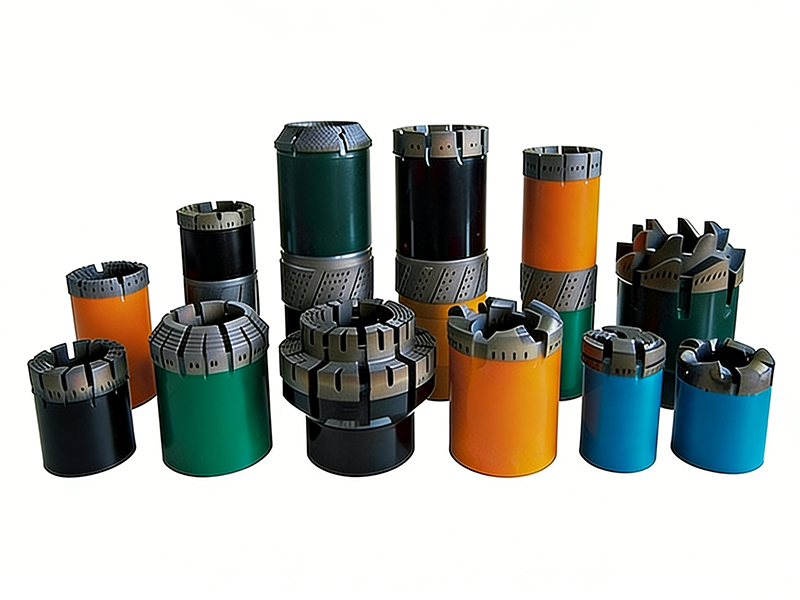
Diamond drill bits can be divided into various types according to their design and application scenarios to meet diverse drilling needs:
Diamond Core Drill Bits: The core function of this type of drill bit is core sampling. It can accurately obtain cylindrical core samples from rocks or other materials, which is crucial for geological exploration research, engineering quality inspection, and material composition analysis, providing direct physical basis for subsequent analysis and decision-making.
Diamond Impact Drill Bits: Mainly suitable for impact drilling operations. Its design enables it to perform excellently when drilling brittle and hard materials such as concrete and masonry. Through the combined action of impact and rotation, it can effectively break materials and improve drilling efficiency.
Diamond Grinding Heads: In addition to drilling, diamond grinding heads are more used for grinding and cutting operations. They play an important role in stone processing, glass processing and other fields, enabling precise grinding and cutting of materials.
Considerations for Selecting Diamond Drill Bit Specifications
Choosing the right diamond drill bit is crucial to ensuring drilling efficiency and effectiveness. When making a selection, the following aspects usually need to be considered:
The specification parameters of the drill bit are an important basis for selection. Although the specific values vary depending on the application, the main parameters to focus on include the diameter of the drill bit (determining the hole size), length (adapting to different drilling depth requirements), diamond concentration (affecting cutting ability and wear resistance), and bond hardness (affecting the adaptability of the drill bit to different materials).
More importantly, when selecting, it is necessary to comprehensively consider actual working condition factors such as the hardness of the material to be drilled (the harder the material, the higher the requirements for drill bit performance), the desired drilling depth (deep holes may require drill bits of specific length and strength), and the required drilling diameter (which needs to match the drill bit diameter).
Correct Usage Methods of Diamond Drill Bits
In order to ensure the safe and efficient use of diamond drill bits and extend their service life, it is crucial to follow the correct usage instructions:
Pre-Drilling Preparation: Before starting drilling, be sure to carefully check whether the drill bit has damages such as cracks or missing teeth. At the same time, ensure that the drilling operation surface (such as the bottom of the well) is clean and free of debris and falling objects to avoid unnecessary damage to the drill bit or affecting drilling accuracy.
Drill Bit Installation: When installing the drill bit, first clean the connection part of the drill bit (such as the male or female thread) to ensure the connection surface is clean and free of oil. Then firmly install the drill bit on the drilling tool to prevent loosening or falling off during high-speed rotation.
Operation Specifications: After starting the drilling equipment, it is recommended to let the machine idle for a short time to preheat, so that all components can reach normal working conditions. During the drilling process, maintain a uniform feed speed and pressure to avoid excessive force causing the drill bit to overheat, increased wear, or motor overload damage. When feeling a sudden increase in drilling resistance, appropriately slow down the feed speed or pause the operation, check the cause, and prevent jamming or damage to the drill bit.
Lubrication and Cooling: A lot of frictional heat will be generated during the drilling process, so it is necessary to use appropriate cutting fluid or clean water for continuous lubrication and cooling of the drill bit. This can not only effectively reduce the friction between the drill bit and the material, reduce heat generation, but also timely remove the debris generated during drilling to keep the drilling smooth.
Safety Measures: Drilling operations have certain safety risks. Operators must wear goggles (to prevent debris from splashing into the eyes) and protective gloves (to protect hands). For the workpiece to be processed, use a fixture to firmly fix it to prevent it from moving during drilling. At the same time, avoid any part of the body from being close to the rotating drill bit and workpiece to ensure operational safety.
Maintenance of Diamond Drill Bits
Doing a good job in the daily maintenance of diamond drill bits is an effective way to extend their service life and maintain good drilling performance:
Cleaning the Drill Bit: After each use, timely remove the rock powder, debris, and cutting fluid residues on the drill bit. A brush or clean water can be used for to ensure the drill bit surface and chip removal grooves are clean and unobstructed.
Regular Inspection: Regularly check the wear of the drill bit, including the wear degree of diamond particles, the wear of the bond, and whether the drill bit body is deformed or cracked. If severe wear or damage is found, the drill bit should be replaced in time to avoid affecting drilling quality and efficiency, or even causing safety accidents.
Proper Storage: When not in use, the drill bit should be stored in a dry, ventilated environment free of corrosive gases, and avoid collision with other hard objects. The drill bit can be placed separately in a special toolbox or packaging box to prevent damage.
Leave a Reply
You must be logged in to post a comment.