In geological exploration, oil drilling, water well drilling, or mining operations, the efficiency and safety of enlarging existing boreholes largely depend on tool selection—and the diamond reamer is the core tool for such operations. It can accurately adapt to different geological conditions and efficiently expand borehole diameters, but to fully utilize its performance, scientific selection methods and usage specifications must be mastered. This article will detail the types, selection points, and usage precautions of diamond reamers to help improve the efficiency and safety of drilling operations.
I. What is a Diamond Reamer?
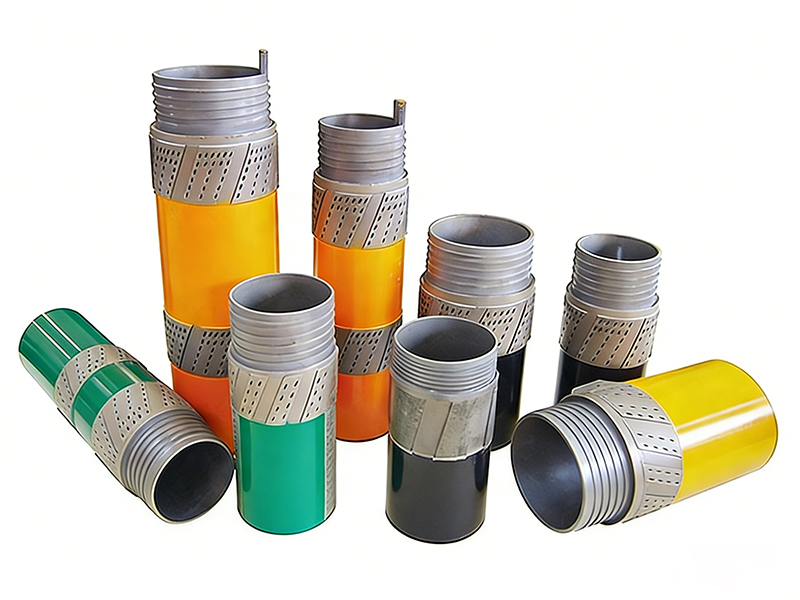
A diamond reamer is a professional tool used to enlarge existing boreholes. With the high hardness and wear resistance of diamond materials, it is widely used in geological exploration, oil drilling, water well drilling, mining, and other fields. Its core function is to expand the borehole diameter to the required size through the cutting, crushing, or shearing action of the cutter head on the basis of an existing borehole, serving as a key link connecting “”borehole formation”” and “”reaming”” in drilling operations.
II. Main Types of Diamond Reamers: Selection Based on Geological Conditions
Different geological conditions have significantly different performance requirements for reamers. Currently, common diamond reamers are mainly divided into the following three types, which need to be selected based on rock formation hardness and characteristics:
1. Polycrystalline Diamond Compact (PDC) Reamer: Preferred for High-Speed Drilling in Hard Rock
The cutter head of a PDC reamer is made of polycrystalline diamond compact material, which efficiently cuts rock formations through shearing action, making it especially suitable for high-speed drilling in hard rock sections. Its advantages include:
– Strong wear resistance of the cutter head, maintaining stable cutting efficiency in hard rock;
– Excellent cuttings removal capability, reducing borehole blockage and improving operational continuity;
– Suitable for rapid reaming needs in medium to hard rock (e.g., granite, sandstone).
2. Tungsten Carbide Insert (TCI) Reamer: Durable Choice for Extremely Hard and Abrasive Rock
The cone part of a TCI reamer is made of tungsten carbide material, which processes rock mass through extrusion and crushing action, making it more suitable for extremely hard and abrasive rocks (e.g., quartzite, basalt). Its core features are:
– Outstanding durability in highly abrasive environments, reducing time costs associated with frequent tool replacement;
– Enhanced impact resistance through cutter head structural design, adapting to sudden stress changes in complex rock formations;
– Often used in mining or deep geological exploration, performing stably in harsh geological conditions.
3. Steel Tooth Reamer: Economical and Practical Tool for Soft to Medium-Hard Rock Formations
Steel tooth reamers expand boreholes through cutting and crushing action of steel teeth, suitable for soft to medium-hard rock formations (e.g., claystone, shale). Its advantages are:
– Relatively low manufacturing cost, suitable for small and medium-sized drilling projects sensitive to budget;
– Flexible tooth design, with adjustable cutting angles based on rock formation characteristics to improve adaptability;
– Simple maintenance, with service life extendable through regrinding when slightly worn.
III. How to Select a Diamond Reamer? Analysis of Key Factors
Selecting a diamond reamer requires comprehensively considering geological conditions, borehole diameter requirements, and application scenarios; only by matching these three can efficient and safe operations be ensured:
1. Geological Conditions: Core Matching Basis
Rock formation hardness and characteristics are the primary factors for selection:
– Soft to medium-hard rock formations (e.g., clay, shale): Prioritize steel tooth reamers, balancing efficiency and cost;
– Hard rock sections (e.g., granite, sandstone): PDC reamers with shearing action are more efficient, suitable for high-speed drilling;
– Extremely hard and abrasive rocks (e.g., quartzite, basalt): TCI reamers with extrusion-crushing capability and wear resistance are more suitable.
2. Borehole Diameter: Precise Specification Matching
Select reamer specifications based on the final borehole diameter in the drilling design to avoid irregular boreholes or tool damage due to size deviations:
– The “”reaming range”” of the reamer must cover the interval from the “”existing borehole diameter”” to the “”target diameter””;
– For multi-stage reaming (e.g., gradually expanding from a small diameter), select corresponding specifications by stage to avoid excessive single reaming amplitude.
3. Application Scenarios: Adapting to Operational Needs
Different drilling scenarios have different performance requirements for reamers:
– Horizontal directional drilling: Reamers need good guidance and stability; PDC or TCI types are more suitable;
– Water well drilling: Focus on borehole quality and efficiency; steel teeth can be selected for soft to medium-hard rock formations, and PDC for hard rock sections;
– Mining operations: Facing complex rock formations and highly abrasive environments, TCI reamers have advantages in durability.
IV. Manufacturing Process: Invisible Factor Affecting Performance and Lifespan
In addition to type and specifications, the manufacturing process of diamond reamers directly determines their hardness, wear resistance, and service life. Attention should be paid to process quality during selection:
– Electroplating/Electroforming Process: Firmly bonds diamond particles through a metal coating, with mature technology, suitable for medium-intensity drilling scenarios, and relatively controllable cost;
– Pressureless Impregnation Sintering Process: Forms a dense structure through high-temperature sintering, with tighter bonding between diamond and matrix, capable of withstanding harsher abrasion and impact, suitable for high-demand deep exploration or mining operations.
High-quality reamers emphasize uniform distribution of diamond particles and matrix strength in their. The quality can be preliminarily judged by observing the flatness of the cutter head surface and welding quality.
V. Use and Maintenance of Diamond Reamers: Ensuring Efficiency and Safety
Proper use and maintenance are key to extending reamer lifespan and ensuring operational safety. The following three points should be noted:
1. Strictly Adhere to Operating Procedures
– Avoid overpressure or overspeed operation: Adjust drilling pressure and rotation speed according to rock formation characteristics; control speed in hard rock sections to prevent cutter head overheating or chipping;
– Keep the borehole clean: Timely remove cuttings to avoid uneven stress on the reamer due to blockage;
– Prohibit “”idling””: Do not start the equipment when not in contact with the rock formation to prevent cutter head wear without load.
2. Regular Maintenance
– Post-Use Cleaning: After each operation, rinse the cutter head and connection parts with clean water to remove cuttings and oil;
– Wear Inspection: Regularly observe cutter head wear; if tooth wear exceeds 1/3 of the original size, or cracks or tooth loss occur, replace promptly;
– Maintenance of Connection Components: Check if threaded connections, buckles, and other parts are loose to ensure firm connection with the drill pipe.
3. Strengthen Safety Measures
– Personal Protection: Must wear goggles (to prevent cuttings splashing), non-slip gloves (to prevent tool slipping), and safety helmets during operation;
– Work Environment Inspection: Ensure the drilling platform is stable, with no obstacles around to avoid tool falling or personnel tripping;
– Abnormality Handling: If the reamer makes abnormal noise or vibrates abnormally, stop the machine immediately for inspection and troubleshooting before resuming operation.
Conclusion: Core Principles for Selecting and Using Diamond Reamers
Diamond reamers are the “”efficiency engine”” of drilling operations. Their selection must closely align with geological conditions, borehole diameter requirements, and application scenarios, matching PDC, TCI, or steel tooth types. During use, standardized operation, regular maintenance, and strict safety measures are required to ensure tool performance and operational safety. Only by comprehensively considering these factors can diamond reamers maximize their value in geological exploration, drilling, or mining operations, achieving efficient and safe borehole enlargement goals.”
Leave a Reply
You must be logged in to post a comment.